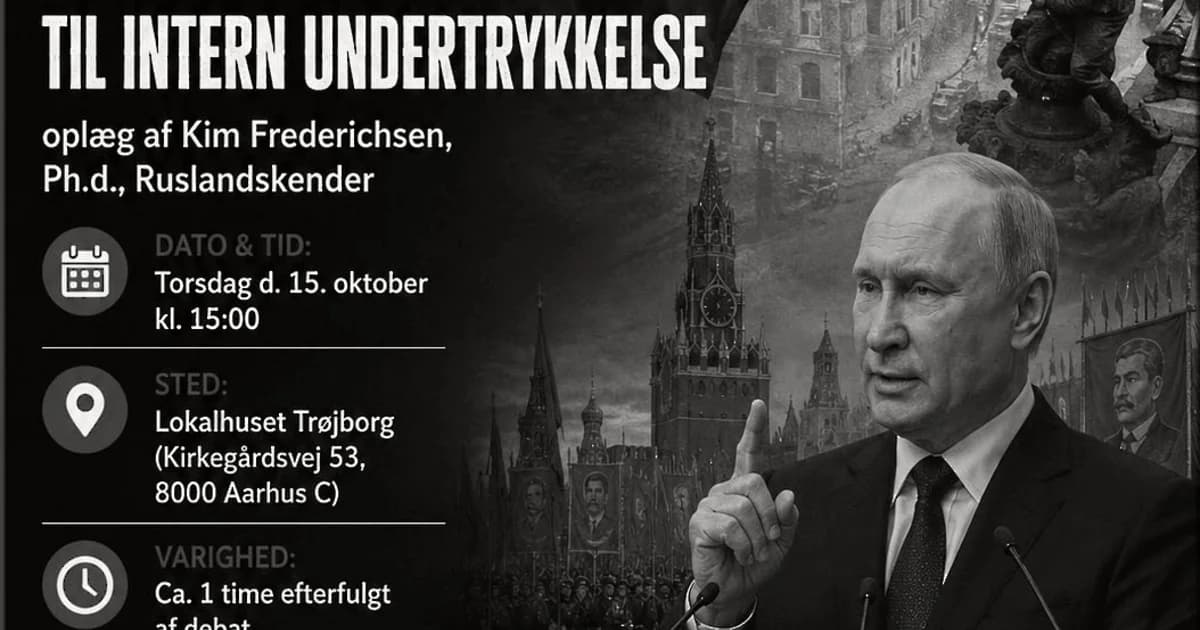
Ph.D. Kim Frederichsen explores the historical paradox that shaped the Soviet Union following Nazi Germany's capitulation in May 1945. While the country celebrated victory over Nazi Germany in the Great Patriotic War, Stalin tightened totalitarian control domestically through intensified censorship, heightened fear, and extensive political purges – much to the disappointment of a population that had hoped for greater freedom.
Frederichsen examines how this historical dynamic has found new relevance under Vladimir Putin's leadership. The lecture illuminates how Putin revives the same myths, narratives, and enemy images from the 1945 period to justify his authoritarian political course, suppress domestic opposition, and rationalize confrontation with the West.















![Abekejser [support: True Crime]](/_next/image/?url=https%3A%2F%2Fevent-images.autopress.dk%2Fevents%2Fthumb%2Fsrc-20316569.webp&w=3840&q=75)